
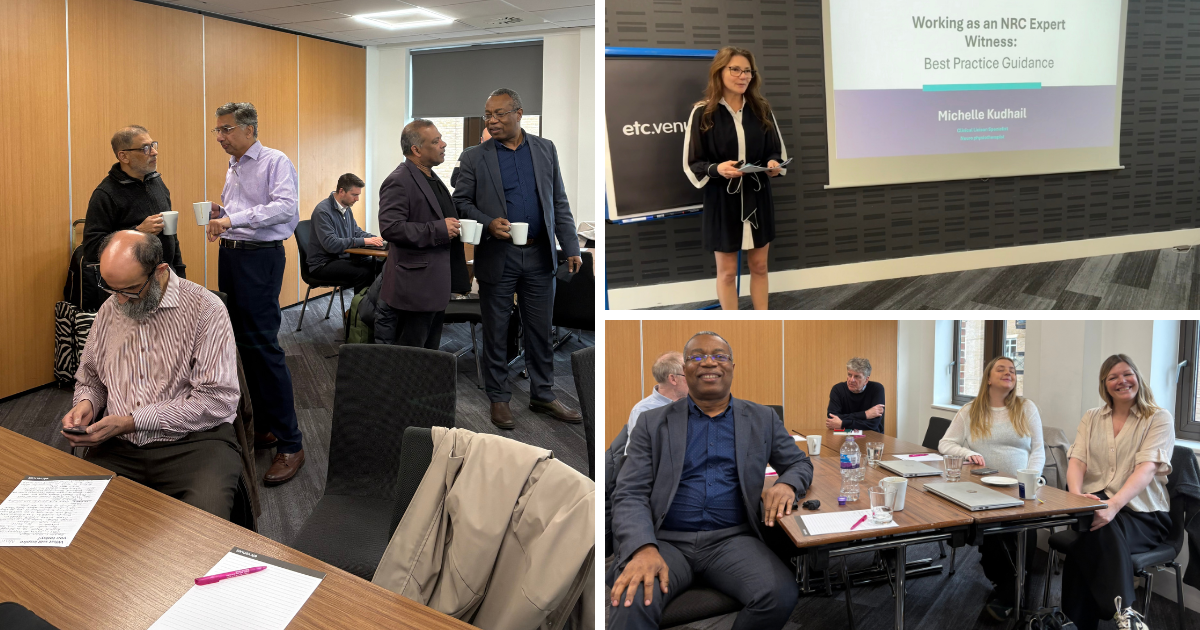
On 12 March 2026, NRC Medical Experts hosted a full-day training and networking event in London, bringing together more than 30 experts from across the UK. The group included both newly appointed experts and experienced clinicians working across rehabilitation medicine, neurology, neuropsychology, neuropsychiatry, and therapy disciplines.
The focus of the day was to strengthen standards, share learning, and support experts to deliver high quality medico-legal evidence. Every session was designed around real expectations from the court and the challenges that arise in practice.
What the Court expects from Expert Witnesses
A key session was delivered by Huw Ponting, Senior Partner at Enable Law. His session focused on what the court expects from expert witnesses and where reports can fall short. The discussion centred on independence, clarity, and reasoning – core requirements. Experts must provide opinion that is impartial, well structured, and supported by a clear line of reasoning.
Case law examples were used to show where courts have criticised expert evidence. Common issues included lack of objectivity, weak reasoning, and failure to engage with all relevant evidence. In many cases, the problem is not clinical knowledge. It is how that knowledge is presented.
The session reinforced that Experts must show how they have reached their opinion – a good report must guide the reader through the reasoning in a way that is easy to follow and grounded in evidence.
Developing Practical Skills
The training day addressed areas of medico-legal work that experts often find challenging, including a detailed session on life expectancy reporting. Another session explored the role of AI in expert witness work, led by Dr Edmund Bonikowski. The focus was on safe and appropriate use, and where there may be areas of application in research and future support for people living with disabilities.
Training is only one part of how NRC supports its experts. A key theme throughout the day was the importance of mentoring and shared learning. For new experts, medico-legal work can feel unfamiliar – the expectations are different from clinical practice. There is a need to understand legal frameworks, report structure, and the level of reasoning required.
At NRC, new experts are supported through this process. They have access to experienced colleagues, clear guidance, and a structured approach to report writing, helping to build confidence and supporting consistent standards from the outset. For more experienced experts, the benefit comes from continued development. Reviewing case law, sharing experiences, and discussing challenges helps refine practice and maintain high standards across the Chambers.
Become a Medical Expert Witness with NRC Medical Experts
If you are a clinician considering expert witness work, or already undertaking medico-legal instructions and looking for a more structured and supportive environment, NRC offers a clear route forward. You will be part of a Chambers that values high standards, clear thinking, and continuous development. You will have access to training, mentoring, and experienced colleagues who support your work.
Our approach is built around developing experts – from your first report through to more complex instructions, you will have guidance and a clear framework to work within. If you would like to find out more about becoming part of NRC Medical Experts, get in touch with our team.