
Small delays or missed signs in stroke care could lead to significant and permanent disability, directly affecting liability, causation and quantum. Clinical decision-making within the hyperacute window, including recognition, imaging and treatment eligibility, was central to how these cases were analysed.
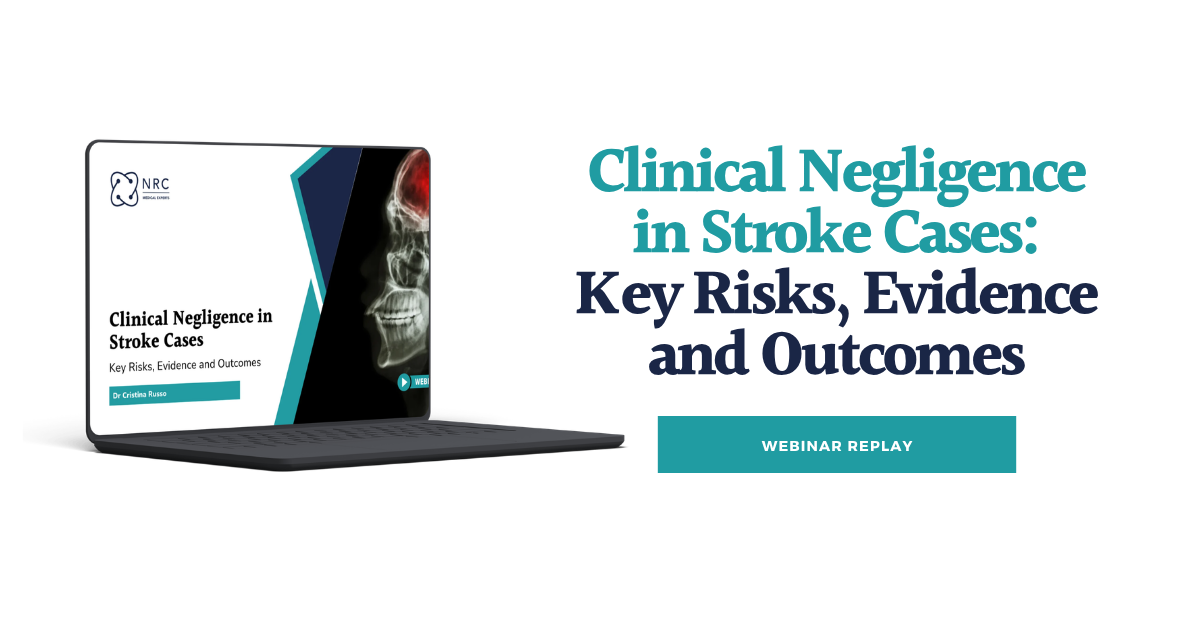
This webinar for legal professionals focused on the full pathway of liability, causation and quantum in stroke cases.
Using real case examples, Dr Cristina Russo explained how clinical evidence was interpreted and how expert opinion supported the court in determining whether earlier intervention would have changed the outcome.
Focus of the session
- Real case examples with clinical reasoning
- Ischaemic vs haemorrhagic stroke, and why the distinction shaped the case
- Thrombolysis and thrombectomy pathways in detail
- Common failure points across ambulance, A&E and stroke unit care
- Recent UK protocol changes and their legal implications
📺 Watch the webinar – below and on YouTube
Key learning points
Viewers will come away with a clearer understanding of:
- Where breach is most likely to arise across the stroke pathway
- How experts analyse causation and approach the counterfactual
- How severity of disability shapes care needs and quantum
- How to instruct and work effectively with a stroke expert witness
- Breach, causation, prognosis and future needs, set out clearly
Who the recording is for
Need expert input on a case?
NRC Medical Experts provides access to specialists with extensive experience in stroke assessment and reporting
Contact us to learn more:
📩 enquiries@nnrc.org.uk
📞 0191 466 1406
🔍 Search our directory to find an Expert Witness