

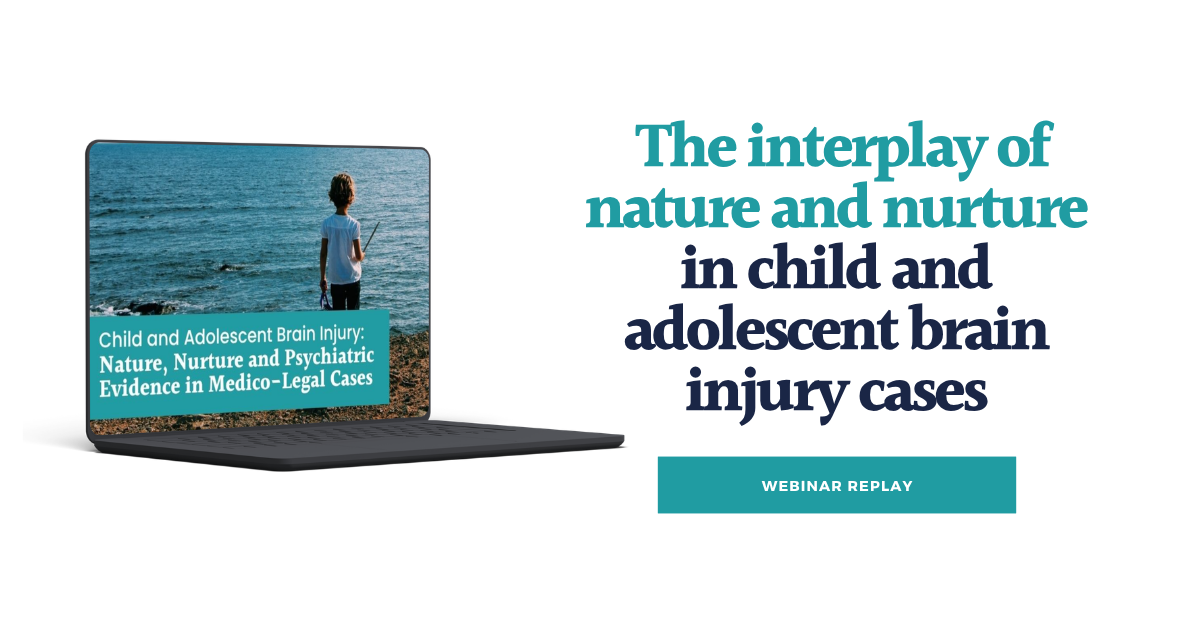
In serious injury cases involving children and young people, it can be difficult to separate the effects of an incident from a child’s pre-existing development, mental health, family circumstances and wider environment.
This webinar for legal professionals and case managers examined the relationship between “nature”, including underlying conditions, neurodevelopmental profiles and psychiatric vulnerability, and “nurture”, including trauma, family context, school disruption and access to rehabilitation.
Using his experience in child, adolescent and neurodevelopmental psychiatry, Dr Muhammad Gul explained how these factors can influence presentation, recovery, prognosis and future support needs following traumatic brain injury, road traffic incidents and other serious events.
Focus of the session
- Pre-existing developmental, emotional and behavioural difficulties
- New psychiatric symptoms following injury or trauma
- The aggravation of an underlying condition
- The effect of family, school and social circumstances on recovery
- The role of rehabilitation and access to treatment
- Causation, condition and prognosis in child brain injury cases
- The evidence required to assess changes in behaviour and functioning
📺 Watch the webinar – below and on YouTube
Key learning points
Viewers will gain a clearer understanding of:
- How pre-existing developmental or psychiatric difficulties may affect causation and prognosis
- How brain injury and traumatic events can affect mood, behaviour, emotional regulation, learning and relationships
- How experts distinguish between pre-accident vulnerability and incident-related change
- Why a child’s developmental stage must be considered when assessing future outcomes
- How family life, education and access to rehabilitation may influence recovery
- When a child and adolescent psychiatrist may be required within a medico-legal case
- How psychiatric expert evidence can support the Court with questions of capacity, treatment, care and future support
Why causation may be difficult
A child may have had subtle developmental, emotional or behavioural difficulties before an accident. These may have been undiagnosed, well managed or only apparent in certain settings, such as at home or school.
Following an injury or traumatic event, these difficulties may become more pronounced. Some children develop new psychiatric symptoms. Others experience a worsening of an existing vulnerability.
The assessment must consider the child’s pre-accident history, developmental stage, medical evidence, school records, witness accounts and post-accident circumstances.
Expert witness neuropsychiatrist Dr Gul explains how this evidence can be assessed and presented clearly within a medico-legal report.
Who the recording is for
This webinar is designed for:
- Solicitors handling serious injury and clinical negligence claims involving children and young people
- Barristers working with complex medical and psychiatric evidence
- Case managers planning rehabilitation and long-term support
- Professionals supporting children with brain injury, behavioural change or neurodevelopmental difficulties
Need expert input on a case?
NRC Medical Experts provides access to experienced medical and therapy experts working across brain injury, complex neurological disability, neuropsychiatry and rehabilitation.
Contact us to learn more:
📩 enquiries@nnrc.org.uk
📞 0191 466 1406
🔍 Search our directory to find an Expert Witness