

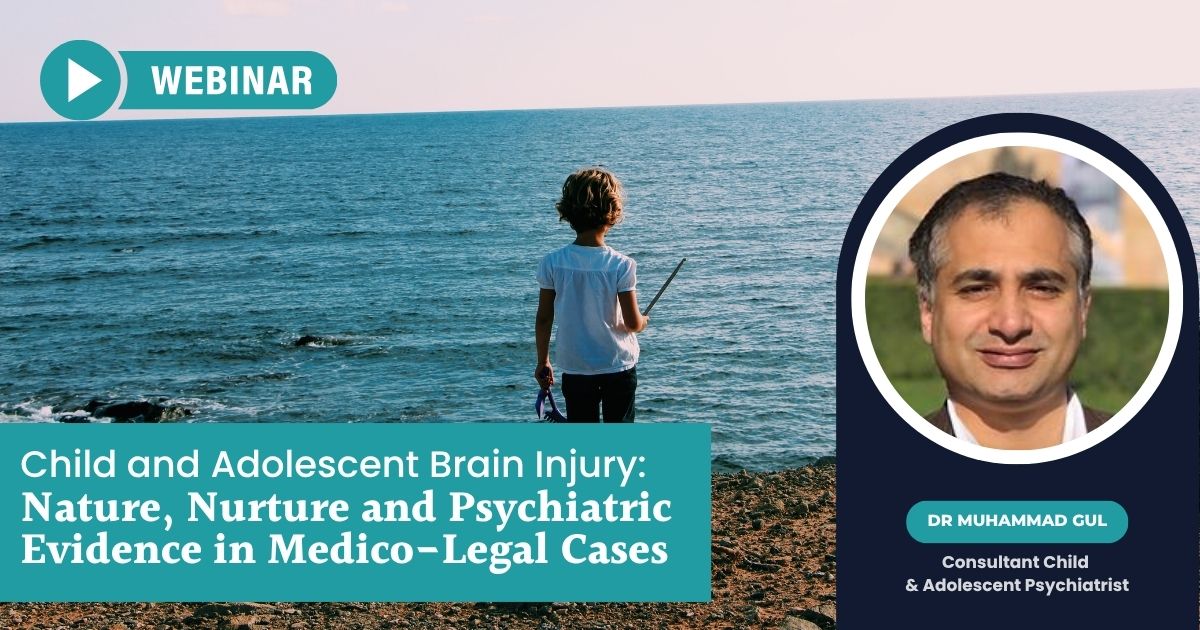
Wednesday 15 July | 4pm | Free to attend | Book your free place via Zoom
NRC Medical Experts is pleased to invite you to a free webinar with Dr Muhammad Gul, Consultant in Child, Adolescent and Neurodevelopmental Psychiatry.
This session will focus on the relationship between “nature”, including underlying conditions, neurodevelopmental profiles and psychiatric vulnerability, and “nurture”, including trauma, family context, school disruption, access to rehabilitation and wider environmental factors.
Designed for solicitors, case managers and professionals involved in serious brain injury, clinical negligence and rehabilitation cases, the webinar will consider how these factors can affect children and young people following traumatic brain injury, road traffic incidents and other serious events.
Children and adolescents may present with complex emotional, behavioural, learning, social and communication difficulties after injury. In some cases, there may already be pre-existing neurodevelopmental, mental health, family or social factors that influence presentation, recovery and long-term needs.
This can raise difficult questions for legal teams and case managers, including:
- Was the child already vulnerable before the incident?
- Did the incident lead to a new psychiatric condition?
- Has the injury aggravated a pre-existing condition?
- How should the Court distinguish between pre-existing difficulties, incident-related change and environmental influences?
- What support will the child need now and into adulthood?
Dr Gul will explain how expert psychiatric assessment can assist with questions of causation, condition and prognosis. The session will consider how a child’s pre-accident history, developmental stage and post-accident circumstances can influence recovery, future support needs and rehabilitation planning.
Learning outcomes
By attending this webinar, you will gain a clearer understanding of:
- How pre-existing developmental, psychiatric or behavioural difficulties may affect causation and prognosis.
- How traumatic brain injury and road traffic incidents can affect mood, behaviour, emotional regulation, learning, relationships and daily functioning.
- How to distinguish between pre-accident vulnerability, accident-related change and environmental factors after injury.
- Why family, school, social context and access to rehabilitation can shape recovery and long-term outcomes.
- When a child and adolescent psychiatrist may be needed within a medico-legal case.
- How psychiatric expert evidence can support questions of causation, prognosis, capacity, care needs and future treatment.
- What to consider when reviewing records, witness evidence and post-accident behavioural changes.
In serious injury cases involving children and young people, causation is rarely simple. A child may have had subtle developmental, emotional or behavioural difficulties before an accident. These may have been well managed, undiagnosed or only visible in certain settings, such as school or home.
Following a traumatic event, those difficulties may become more pronounced. Some children may develop new psychiatric symptoms, while others may experience a worsening of existing vulnerabilities.
This webinar will offer practical insight into how these issues are assessed and explained within a medico-legal context.
Book your free place via Zoom
The session will be recorded and shared with all registrants. If you are unable to attend live, please register to receive the recording.
About Dr Muhammad Gul
Dr Muhammad Gul is a Consultant in Child, Adolescent and Neurodevelopmental Psychiatry and a medical expert for NRC Medical Experts.
He has extensive experience in the assessment and treatment of children and young people. In NHS practice, Dr Gul leads the delivery of evidence-based care within Child and Adolescent Mental Health Services and has experience across acute adolescent inpatient care, psychiatric intensive care and eating disorder services.
Dr Gul’s medico-legal expertise includes cases involving children and young people with emotional, behavioural, learning, social and communication difficulties, including complex neurodevelopmental disorders. Find out more.